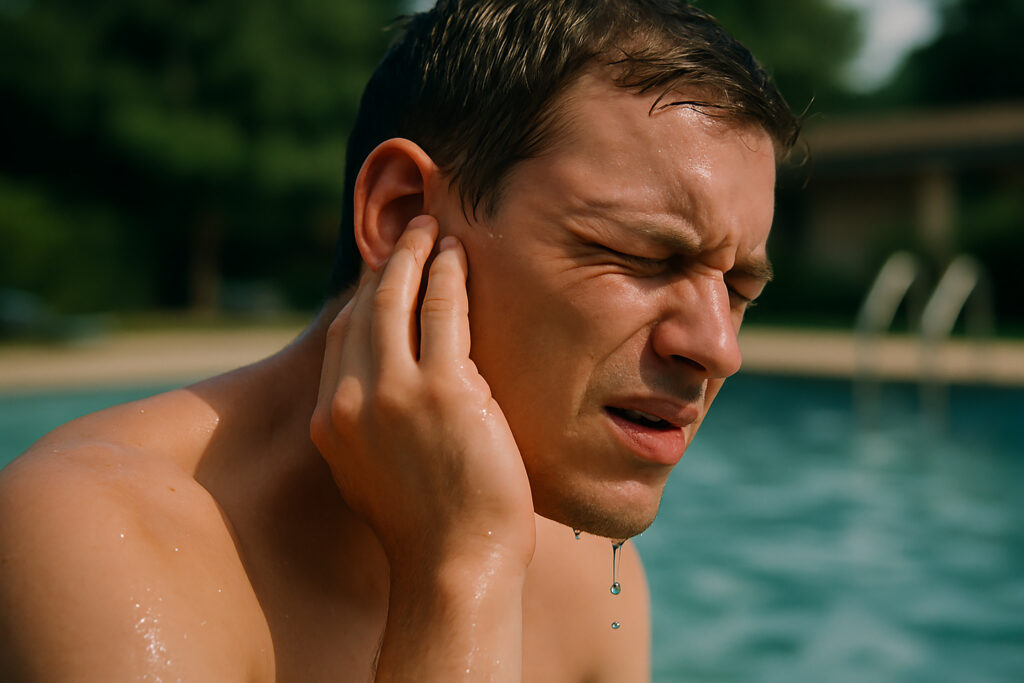
Ear Pain After Swimming? What Is “Swimmer’s Ear,” and How Can You Avoid It?
Otolaryngologist consultation
An otolaryngologist, or ENT specialist, diagnoses and treats diseases of the ears, nose, throat, head, and neck in both adults and children.
Otolaryngologist consultation
An otolaryngologist, or ENT specialist, diagnoses and treats diseases of the ears, nose, throat, head, and neck in both adults and children.
In summer, many people choose to relax by the water, take part in water sports, and swim regularly. Yet it is precisely during the warm season that ear pain and itching become a common reason for visiting a doctor. One of the most typical summer problems is “swimmer’s ear,” or inflammation of the external ear canal (otitis externa).
The head of our clinic, Dr. med. Rūdolfs Jānis Vīksne, explains – ears are not suited to prolonged exposure to moisture. If water remains trapped in the ear canal after swimming, body heat creates an ideal “greenhouse effect” – a warm, moist environment in which bacteria can multiply within a few hours. Therefore, “swimmer’s ear” is most often a combination of water and skin irritation that we have unwittingly caused ourselves.
What Is Swimmer’s Ear?
Medically, this condition is called otitis externa – inflammation of the external ear canal. It differs from a middle ear infection (otitis media), which is more often associated with a cold and problems involving the nasopharynx/nose. “Swimmer’s ear” most often begins specifically after swimming, when moisture remains in the ear for longer.
Why Does It Occur More Often in Summer?
In summer, there are simply more conditions that promote inflammation:
- more frequent swimming (in a pool, lake, or sea);
- heat and moisture, which accelerate the multiplication of microorganisms;
- irritation of the skin in the ear canal (chlorinated water, earphones, cotton swabs);
- small, even invisible, micro-injuries to the skin through which infection can enter the ear canal more easily.
Why Can the Pain Be So Severe?
The skin of the external ear canal is sensitive and rich in nerve endings, so inflammation can cause sharp, localized pain that worsens when the ear is touched or the jaw is moved. Although the pain may be pronounced, the inflammation is usually superficial and, if identified promptly, can be treated relatively quickly and successfully.
Myth and Truth About Cotton Swabs
Myth: after swimming, the ears should be cleaned thoroughly with a cotton swab.
Truth: a cotton swab often pushes earwax deeper, compacts it, and can cause microscopic abrasions in the ear canal. These become “entry points” for infection – especially if the ear is already moist.
Moreover, earwax is not “dirt” that must be removed at all costs. Earwax creates a naturally mildly acidic environment that acts as an invisible shield against microbes and fungi. By removing it regularly and then additionally soaking the ear with water, we literally open the door to inflammation.
How Can You Reduce the Risk of “Swimmer’s Ear” in Summer?
Prevention is usually simple:
- after swimming, tilt your head to the side and allow the water to drain out;
- dry only the outer ear, without going deeper into the ear canal;
- do not use cotton swabs to clean your ears;
- if your ears are sensitive or the inflammation recurs, consider swimming earplugs (especially in a pool);
- if itching or irritation develops, do not rub or “scratch” the ear canal, as this increases the risk of skin damage.
If inflammation of the external ear tends to recur, over-the-counter ear drops containing acetic acid may sometimes also help after swimming, as they help maintain an environment in the ear canal that is less conducive to inflammation. It is advisable to consult a doctor or pharmacist about the most suitable option.
When Should You Definitely See a Doctor?
You should not wait if:
- the pain worsens rapidly;
- discharge appears from the ear;
- hearing deteriorates or marked swelling develops;
- you have a fever or feel very unwell;
- you have diabetes, an immune disorder, or other risk factors (in such cases, it is especially important to treat inflammation promptly).
When the situation is assessed promptly, treatment is usually shorter and simpler, and there is a greater chance of avoiding complications.
Book an appointment:
Dr. med. otolaryngologist consultation
Specialist: