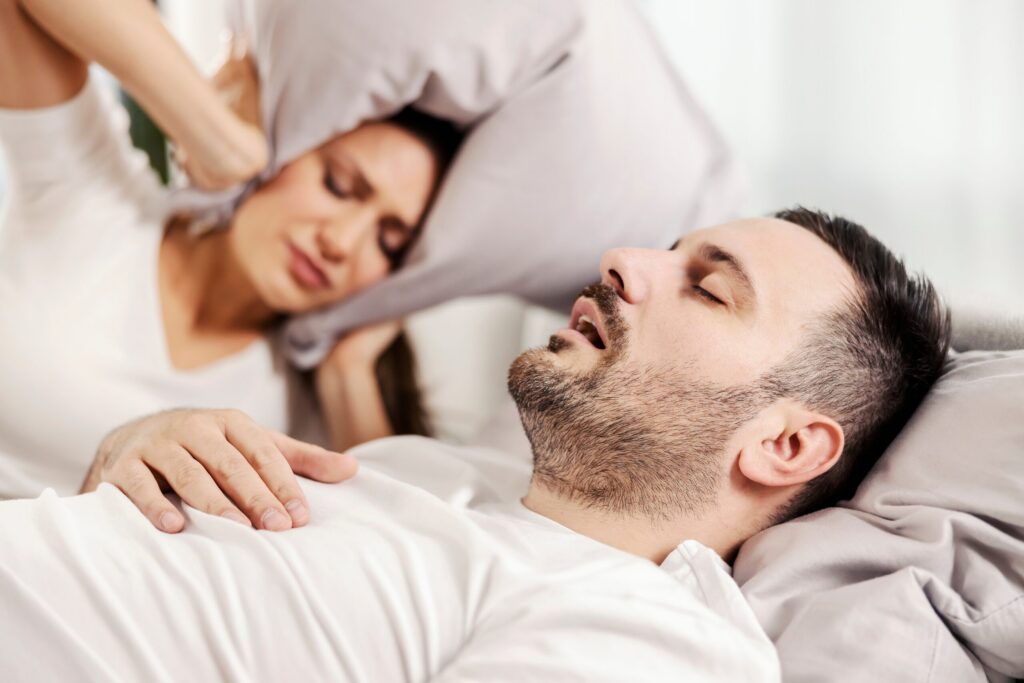
Snoring – the respiratory system’s alarm: when does it signal serious problems?
Outpatient polygraphy
Polygraphy is a modern and suitable method of sleep examination for both adults and children. Unlike inpatient examinations, polygraphy is performed on an outpatient basis – in the patient’s usual environment and sleeping conditions.
Outpatient polygraphy
Polygraphy is a modern and suitable method of sleep examination for both adults and children. Unlike inpatient examinations, polygraphy is performed on an outpatient basis – in the patient’s usual environment and sleeping conditions.
Many people regard snoring as a minor domestic nuisance or a subject for jokes. However, snoring is not always merely a sound that disturbs others at home. Sometimes it signals narrowing of the airways and a serious condition – obstructive sleep apnoea. Our otolaryngologist, Dr Rudīte Pivņenko, explains how to distinguish harmless snoring from situations in which you should definitely see a doctor.
When is snoring normal?
Snoring occurs when air flows through narrowed airways. Sometimes this is temporary and does not indicate a serious problem.
For example, a person may snore for a few nights during a cold when the nose is blocked, during an allergy flare-up, or after a party because alcohol relaxes the muscles of the airways. In these situations, the snoring should stop once the cause has been resolved.
However, if snoring continues for months or even years without an obvious reason, it should not be considered normal.
Why can snoring become a health problem?
For some people, snoring is only a sound and does not harm their health. It is quite another matter if the airways periodically close during sleep, the person stops breathing briefly, and the body receives less oxygen. This condition is called obstructive sleep apnoea, and it can become dangerous because prolonged oxygen deprivation affects the entire body: sleep quality deteriorates, the strain on the heart and blood vessels increases, and the risk of various chronic diseases rises.
Oxygen deprivation does not hurt. It is a long, slow process that the person often does not notice at all. A partner or family member is usually the first to notice pauses in breathing during sleep – sometimes even a pet does. Patients often wonder why their cat or dog persistently wakes them at night, but the animal senses that something is wrong.
Signs that should not be ignored
When you live alone, the signs are harder – but not impossible – to notice. Loud snoring is not the only indication of sleep apnoea. You should also pay attention if:
- pauses in breathing or choking episodes are observed during sleep;
- you wake up tired despite having slept for a sufficient 7–9 hours;
- you experience pronounced daytime sleepiness;
- you regularly wake with a heavy head, dry mouth, or a hangover-like feeling despite not drinking alcohol the previous evening;
- you find it difficult to concentrate and your performance declines;
- high blood pressure or excess weight is difficult to control successfully.
Many people associate these symptoms with stress or overwork, but they are often caused by poor-quality sleep and a lack of oxygen at night.
Drivers should pay particular attention to daytime tiredness: the risk of falling asleep at the wheel endangers not only themselves but also the health and lives of others.
How can you find out whether snoring is dangerous?
If snoring is regular or sleep apnoea is suspected, one of the most important tests is sleep polygraphy. This is a painless, non-invasive test performed at home in the patient’s familiar surroundings. It assesses breathing, oxygen levels, and other indicators during sleep. The test helps determine whether snoring is merely a sound or whether episodes of interrupted breathing occur during sleep.
Once the test has been completed, the most appropriate treatment strategy can be selected.
Who is at greatest risk?
Sleep apnoea is more often diagnosed in people who are overweight or have high blood pressure, diabetes, or other chronic conditions.
Excess weight and sleep apnoea often form a vicious circle: the poorer the quality of sleep and the less oxygen the body receives, the harder it is to normalise metabolism and reduce body weight. Therefore, patients receiving treatment from a cardiologist, endocrinologist, or pulmonologist are also advised to have their breathing during sleep assessed. However, anyone who wishes to do so can have the test without waiting for a special referral from a specialist.
Snoring in children must not be considered normal!
Unlike adults, children rarely snore loudly. It is advisable to consult an ENT specialist if:
- the child makes unusual breathing sounds during sleep – snorts or breathes heavily or noisily;
- the child regularly sleeps with their mouth open;
- the child also breathes through their mouth during the day.
Children are born wise: the nose is meant for breathing and the mouth for eating. If a child does not breathe through their nose, something is obstructing them. The earlier problems are identified and resolved, the lower the likelihood of developing an incorrect bite, deformed jaws, severe apnoea, or other problems that may take much longer and be more complicated to treat later in life.
Can snoring be treated?
Snoring can – and in most cases should – be treated, without waiting for apnoea to lead to a heart attack or stroke. Apnoea is neither a sentence nor a stigma. Depending on its cause, treatment options vary considerably. Our doctors always make decisions together with the patient, respecting their wishes and circumstances.
For some patients, lifestyle changes are sufficient: losing weight, limiting alcohol consumption, or changing sleeping position.
Some types of apnoea can be managed with the help of an orthodontist or speech and language therapist. For example, positional apnoea, which occurs when sleeping on the back, can be compensated for with an orthodontic mouthguard. It prevents the jaw from moving closer to the back wall of the throat. Exercises to strengthen the throat muscles and pillows that make sleeping on the back uncomfortable can also help.
If moderate or severe sleep apnoea is diagnosed, breathing support during sleep may be necessary. In such cases, the state covers at least part of the cost of the device. If surgery is required, it calls for careful and nuanced planning that is highly individual for every patient.
Snoring should be treated like a car alarm
Snoring itself is not a diagnosis, but the first sign that the airways narrow during sleep and the body may not receive enough oxygen. The earlier the problem is identified, the easier it is to treat and prevent serious consequences.
Snoring is like a car alarm: perhaps children playing nearby have hit the car with a ball, or perhaps someone is forcing open the door and taking everything left inside. If snoring is accompanied by pauses in breathing, pronounced daytime fatigue, or other health problems, you should not accept the idea that “everyone has it”. It is worth finding out why the alarm has gone off. Years of disrupted sleep structure leave not only a body that has failed to recover physically, but also a persistently low state of mind and mood. A sleep test does not hurt, but it provides answers and opens the way to better-quality sleep and improved well-being.